Advanced Python Books for Your Next Steps in 2026
Cover Image
Once you have mastered the basics of Python—lists, dictionaries, loops, and basic OOP—the language can suddenly feel deceptively simple. Many developers get stuck on the "intermediate plateau," where their code works but still looks like translated Java or C++, failing to leverage Python's unique data model, asynchronous capabilities, or performance optimization tools.
To write professional, scalable, and idiomatic code in 2026, you need to look beyond tutorials. The following advanced Python books serve as the definitive curriculum for moving from a competent Scripter to an expert Software Engineer.
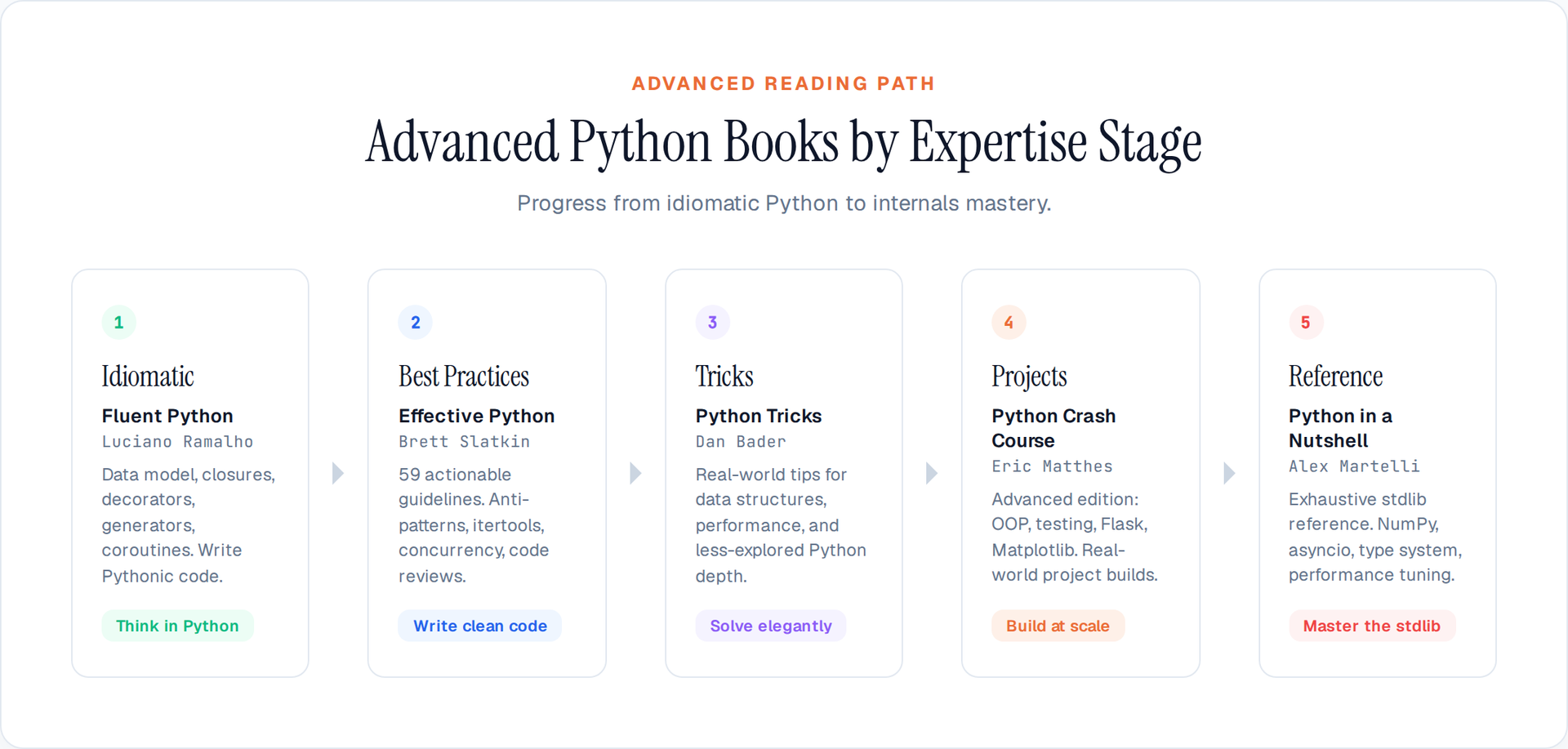
1. The Definitive Deep Dive: Fluent Python by Luciano Ramalho
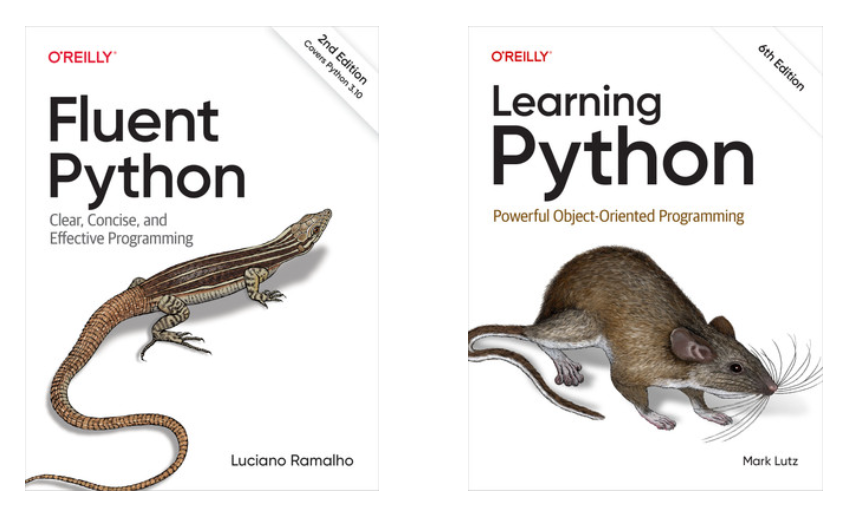
If you only read one advanced Python book in your career, it must be Fluent Python. The book focuses heavily on the Python Data Model—the "dunder" methods (__init__, __len__, __getitem__) that dictate how classes interact with built-in functions.
Instead of fighting the language, Ramalho teaches you how to write code that behaves like native Python objects. You will learn the profound difference between a function and a closure, how decorators actually intercept execution, and the underlying mechanics of generators and coroutines. By the end of this book, you will no longer write Python code; you will write Pythonic code.
2. Mastery of Syntax and Best Practices: Effective Python by Brett Slatkin
Effective Python is formatted not as a narrative textbook, but as a collection of 59 actionable, specific guidelines. If Fluent Python teaches you how the engine works, Effective Python gives you the best practices for driving.
Slatkin covers critical anti-patterns that plague intermediate codebases. He explains exactly when to use list comprehensions over map(), why you should avoid <em>args and </em><em>kwargs in defensive APIs, and the proper way to use itertools. It is an essential read for anyone participating in code reviews, as it provides the exact vocabulary needed to explain why* a certain algorithmic approach is better than another.
3. Pythonic Problem-Solving: Python Tricks by Dan Bader
Python Tricks offers an engaging collection of insights for Python developers aiming to uncover efficient ways to solve programming challenges. Unlike traditional tutorials, this book is structured as a compendium of tips and techniques that guide you into the less-explored depths of the Python language.
Bader's approach presents Python concepts through real-world scenarios, ensuring that each tip is practical and applicable. The book elegantly balances foundational elements and advanced features, offering something of value to both intermediate and seasoned developers. Key insights include better ways to handle Python's versatile data structures like lists, dictionaries, and sets. Through concise code snippets, Bader introduces tricks that enhance efficiency and clarity—a boon for those looking to streamline their code and optimize performance.
4. Structured Project-Based Learning: Python Crash Course (Advanced Edition) by Eric Matthes
Python Crash Course by Eric Matthes is widely recognized for providing a quick yet thorough introduction to Python, and the Advanced Edition builds upon this foundation by exploring more sophisticated aspects of the language. This book is crafted for individuals who already have a basic understanding of Python and are keen to further enhance their skills.
In the Advanced Edition, Matthes delves into Python's more intricate features, offering readers a structured roadmap to tackling complex programming tasks. The book emphasizes hands-on learning through projects that simulate real-world applications, enabling learners to apply theoretical concepts in practical scenarios. Topics covered include advanced data manipulation techniques, comprehensive use of Python libraries, and in-depth exploration of classes and object-oriented programming. Matthes also introduces tools for debugging and testing, which are crucial for developing error-free, efficient code.
5. The Comprehensive Reference: Python in a Nutshell by Alex Martelli
Python in a Nutshell by Alex Martelli stands as an indispensable Advanced Python Book for seasoned programmers seeking an exhaustive reference guide to Python. This comprehensive tome covers everything from fundamental language features to the extensive standard library, making it an essential companion for anyone dedicated to mastering Python's full breadth.
Martelli's expertise shines through in the detailed exploration of Python's core features. The book excels in explaining complex concepts with clarity, providing thorough coverage of Python's syntax, semantics, and the dynamic typing system. Its structured format makes it easy to navigate, serving as a reliable resource whether you're clarifying a command syntax or delving into an advanced programming technique.
The standard library, often described as one of Python's greatest strengths, is meticulously cataloged within this guide. Martelli takes readers on a deep dive into this vast component, offering insights into modules that can address everything from web development to data analysis. The in-depth explanations of libraries like NumPy and Pandas make it a vital tool for data-centric tasks, while sections on modules like asyncio cater to those working in real-time applications.
Moving Forward
Reading advanced programming books requires a different approach than reading a standard tutorial. Do not skim. Keep a REPL open, copy the concepts into your own editor, and run dis.dis() to see the bytecode changes for yourself. Breaking through the intermediate plateau requires deliberate, hands-on practice.
Author

Author